

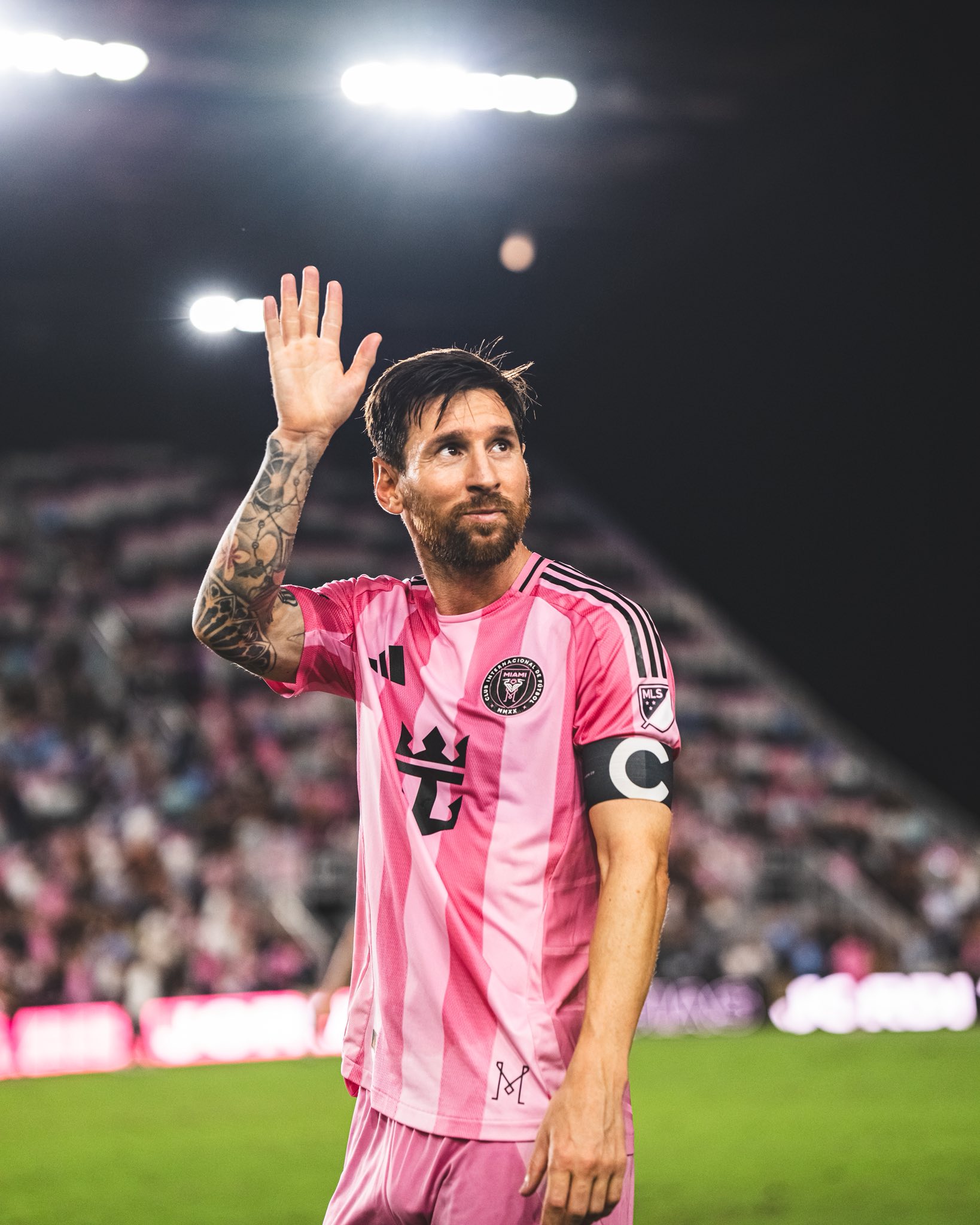
Lionel Andrés Messi, often hailed as the greatest footballer of all time, is an Argentine professional footballer whose skill, determination, and humility have transformed him into a global icon. From a small boy in Rosario with a growth disorder to becoming the world’s best footballer, Messi’s journey is a story of talent, perseverance, and passion.
Early Life and Family Background
Lionel Messi was born on June 24, 1987, in Rosario, Santa Fe, Argentina, to Jorge Messi, a steel factory worker, and Celia Cuccittini, who worked in a magnet manufacturing workshop. Messi was the third of four children, growing up in a humble but loving household that shared a deep love for football.
From an early age, Messi showed an extraordinary interest in the sport. By the time he was five, he was already playing for his local club, Grandoli, coached by his father. His talent was immediately evident — despite his small frame, his speed, precision, and ball control amazed everyone who saw him play.
At the age of eight, Messi joined Newell’s Old Boys, one of Rosario’s most popular clubs. His teammates nicknamed him “La Pulga” (The Flea) because of his short stature and quick movements. During his six years with Newell’s, Messi scored nearly 500 goals and led his team to numerous youth championships.
Struggles with Growth Hormone Deficiency
Messi’s early career was nearly derailed when, at the age of 10, he was diagnosed with a growth hormone deficiency (GHD). His family couldn’t afford the expensive treatment, which cost around $900 per month. While local clubs admired his talent, none could cover the medical expenses.
Everything changed when FC Barcelona came into the picture. After a trial in Spain, the club’s then-director, Carles Rexach, was so impressed by Messi’s talent that he offered him a contract — famously written on a paper napkin— committing to pay for his medical treatment and bring him to Barcelona’s youth academy, La Masia, at just 13 years old.
Rising Through FC Barcelona
Messi moved to Spain in 2000 and joined La Masia, where he trained alongside future stars such as Gerard Piqué and Cesc Fàbregas. His incredible skill, balance, and ball control made him stand out even among elite young players.
He made his official first-team debut for Barcelona on October 16, 2004, at the age of 17, against Espanyol. He scored his first goal the following year against Albacete, becoming the youngest player in club history to score in a La Liga match at that time.
Under the management of Frank Rijkaard, and later Pep Guardiola, Messi developed into a world-class player. He became a central figure in Barcelona’s golden era, forming a deadly trio with Ronaldinho and Samuel Eto’o, and later with Xavi Hernández, Andrés Iniesta, and Neymar Jr.
The Barcelona Era: Records and Triumphs
During his 17 years with FC Barcelona (2000–2021), Messi rewrote football history. He led the club to 10 La Liga titles, 7 Copa del Rey titles, and 4 UEFA Champions League trophies.
Some of his most iconic achievements include:
Scoring 91 goals in a single calendar year (2012) — breaking Gerd Müller’s long-standing record.
Winning the Ballon d’Or (Best Player in the World) a record 8 times (as of 2023).
Becoming Barcelona’s all-time top scorer, with 672 goals in 778 appearances.
Messi’s playing style was unique — a perfect blend of balance, agility, vision, and precision. His low center of gravity, combined with lightning-fast dribbling, allowed him to glide past defenders effortlessly. His left foot became one of the most feared weapons in football, capable of scoring from impossible angles or delivering inch-perfect passes.
Argentina National Team Journey
While Messi conquered the world at club level, his international career began with challenges. He made his senior debut for Argentina in 2005, but his early years with the national team were marked by near misses and heartbreaks — including losing the 2014 FIFA World Cup Final to Germany and three Copa América finals.
Despite the criticism he faced at home, Messi never gave up on his dream to win for his country. His leadership and emotional connection with Argentina became evident when he led the team to victory in the 2021 Copa América, defeating Brazil 1–0 at the Maracanã Stadium. That win ended Argentina’s 28-year trophy drought and brought Messi his long-awaited international glory.
In 2022, Messi achieved the ultimate dream — leading Argentina to victory in the FIFA World Cup in Qatar. At age 35, he was at his brilliant best, scoring 7 goalsand providing key assists. Argentina defeated France in a dramatic final decided by penalties after a 3–3 draw, and Messi was awarded the Golden Ballas the tournament’s best player.
That triumph cemented Messi’s legacy as not only one of the greatest players in history but also as a national hero for Argentina.
Paris Saint-Germain (PSG) and Inter Miami
In August 2021, Messi made an emotional departure from Barcelona after financial issues prevented the club from renewing his contract. He signed with Paris Saint-Germain (PSG, joining stars like Neymar and Kylian Mbappé.
During his two seasons at PSG, Messi won two Ligue 1 titles and added to his career tally of goals and assists, proving that even outside Barcelona, his brilliance never faded.
In July 2023, Messi made another major move, joining Inter Miami CF in Major League Soccer (MLS). His arrival transformed American football culture, bringing record ticket sales, global media attention, and sold-out stadiums wherever he played.
At Inter Miami, Messi not only boosted the sport’s popularity in the United States but also helped the club win its first-ever trophy — the Leagues Cup 2023 — within weeks of his debut.
Playing Style and Legacy
Messi’s genius lies in his simplicity. Unlike many modern players, he doesn’t rely on strength or flashy moves — his power comes from precision, intelligence, and vision. He can change a game with a single touch, whether it’s a curling free-kick, a breathtaking dribble, or a defense-splitting pass.
Throughout his career, Messi has earned admiration not just for his skill but also for his humility and professionalism. Despite his fame, he remains quiet, respectful, and deeply focused on his game.
His rivalry with Cristiano Ronaldo defined an era of football — a competition that pushed both players to incredible heights. But while Ronaldo embodied power and athleticism, Messi symbolized artistry and natural talent.
Personal Life
Messi married his childhood sweetheart, Antonela Roccuzzo, in 2017. The couple has three sons — Thiago, Mateo, and Ciro. Family remains central to Messi’s life, and he often credits them for his strength and balance off the field.
Off the pitch, Messi is known for his charity work through the Leo Messi Foundation, which supports education and healthcare for underprivileged children worldwide. He has also served as a UNICEF Goodwill Ambassador, using his global influence to make a difference.
Conclusion
From Rosario’s dusty streets to the world’s grandest stadiums, Lionel Messi’s journey is a story of resilience, faith, and brilliance. He has broken records, inspired millions, and redefined what it means to be a footballer.
Whether wearing Barcelona’s blue and red, Argentina’s sky blue and white, or Inter Miami’s pink, Messi has always played with the same joy and determination he showed as a child.
As the world continues to witness the final chapters of his incredible career, one thing is certain: Lionel Messi is not just a footballer — he is a living legend whose legacy will inspire generations to come.










Leave a Reply